
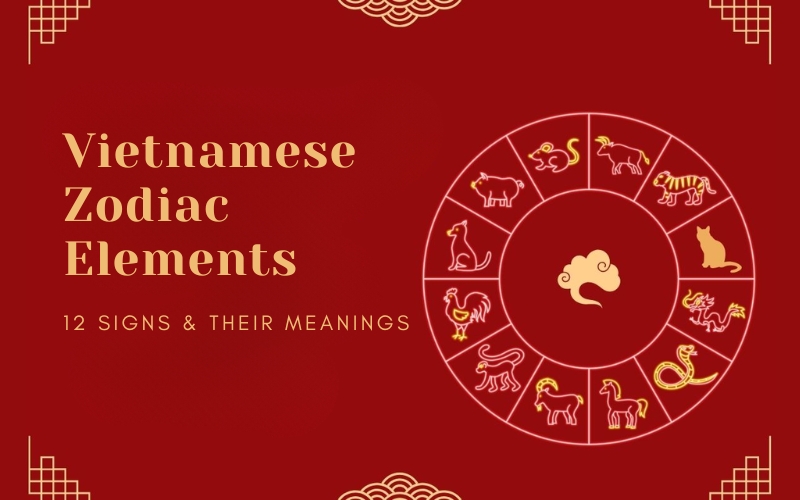
Vietnamese zodiac elements are part of how many Vietnamese people talk about personality, luck, and life milestones, especially around Lunar New Year (Tet). You will often hear two things together: your zodiac animal (one of 12) and your element (one of 5). When you combine them, you get a 60 year cycle that is used across East Asia, but with a few very Vietnamese twists.
This guide is written in a simple, traveler friendly way. You will learn what Vietnamese zodiac elements mean, how they work, and how to find yours correctly (including the important “before Tet or after Tet” detail).
What are Vietnamese Zodiac Elements?
Vietnamese zodiac elements are a traditional way to describe a person’s “zodiac identity” using two layers:
- A zodiac animal (one of 12 animals, called 12 Con Giap)
- An element (one of 5 elements, called Ngu Hanh)
When locals talk about your zodiac in Vietnam, they may say only the animal (for example, “I’m the Cat (Mao)”), or they may use the full version with the element (for example, “I’m a Water Cat (Quy Mao)”). The full version feels more specific because it comes from a 60 year cycle, not just a simple 12 year loop.
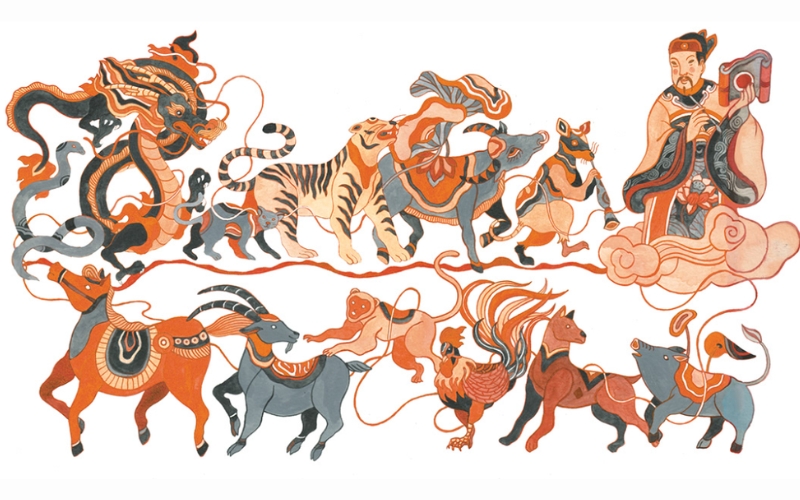
The 12 Vietnamese zodiac animals (Con giap)
These 12 animals repeat in the same order every 12 years. In Vietnamese culture, each animal is linked to a set of common personality images. People use these as friendly descriptions, not strict rules.
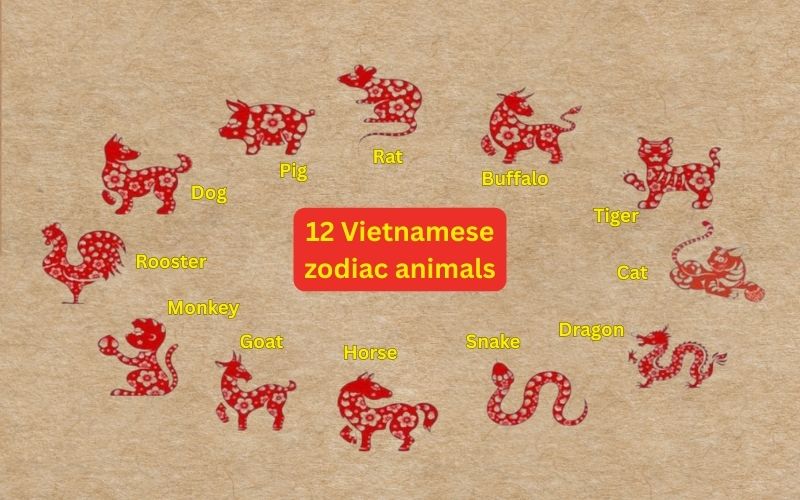
The 12 Vietnamese zodiac animals form a traditional lunar calendar cycle used in Vietnamese culture to represent personality traits, years of birth, and spiritual symbolism.
1. The Rat (Ty): Often linked with quick thinking, adaptability, and strong survival skills. In stories, the Rat is smart and good at finding opportunities.
2. The Buffalo (Suu): The Buffalo is associated with patience, effort, and reliability. In Vietnam, the buffalo is a real symbol of rural life and farming.
3. The Tiger (Dan): Connected with courage, strong will, and leadership energy. Tigers are respected in Vietnam and appear in temples and folk art as protectors.
4. The Cat (Mao): This is one of the most famous differences: Vietnam has Cat, while the Chinese zodiac commonly uses Rabbit. The Cat is often linked with careful thinking, charm, and a more subtle kind of confidence.
5. The Dragon (Thin): A symbol of power, ambition, and big vision. Dragons are not “monsters” in Vietnamese culture they are usually positive, connected with authority and good fortune.
6. The Snake (Ty): Often described as calm, deep, and observant. The Snake is linked with strategy, quiet intelligence, and strong instincts.
7. The Horse (Ngo): Associated with freedom, movement, and independence. People often describe Horse years as energetic, social, and travel friendly.
8. The Goat (Mui): Commonly linked with kindness, creativity, and a gentle personality. Many people also connect it with harmony and family warmth.
9. The Monkey (Than): Known for cleverness, humor, and flexibility. Monkey energy is often described as playful and quick to learn.
10. The Rooster (Dau): Associated with confidence, visibility, and being direct. Roosters are also linked with discipline and caring about details.
11. The Dog (Tuat): Connected with loyalty, fairness, and a strong sense of protection for loved ones. People often describe Dogs as honest and dependable.
12. The Pig (Hoi): Linked with warmth, enjoyment of life, and generosity. In modern talk, Pig energy is often described as friendly, relaxed, and good with people.
The 5 Vietnamese zodiac elements (Ngu Hanh)
The element adds a second layer. Two people can share the same animal but have different elements, which changes the “flavor” of that zodiac year. The five elements are not only “materials”. They describe types of energy in nature and life.
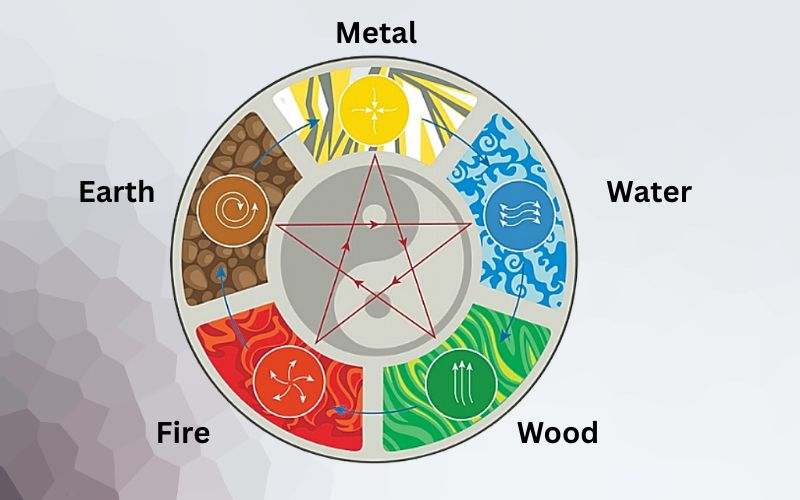
The Five Elements (Ngu Hanh) system in Vietnamese zodiac astrology includes Metal, Water, Wood, Fire, and Earth.
1. Wood (Moc): Represents growth, flexibility, and development. Wood is linked with learning, creativity, and the ability to adapt. People may describe Wood types as kind, cooperative, and always improving.
2. Fire (Hoa): Represents passion, action, and strong emotion. Fire is linked with enthusiasm, confidence, and leadership. Fire types are often described as bold, expressive, and motivated, but sometimes impatient.
3. Earth (Tho): Represents stability, balance, and support. Earth is linked with practicality, responsibility, and trust. Earth types are often described as grounded, caring, and good at building long term security.
4. Metal (Kim): Represents structure, focus, and strength. Metal is linked with discipline, clear thinking, and strong standards. Metal types are often described as determined and organized, but sometimes a bit strict.
5. Water (Thuy): Represents flow, communication, and intuition. Water is linked with emotions, connection, and smart problem solving. Water types are often described as observant, social, and sensitive, but sometimes overthinking.
If you only use the 12 animals, you get a simple zodiac identity that repeats every 12 years. But when you add the 5 elements, the system becomes more detailed: 12 animals repeat every 12 years and 5 elements rotate in a pattern. Together, they create a 60 year cycle (so the same “Fire Dragon” comes back every 60 years). That is why Vietnamese zodiac elements are useful for people who want a more specific description than just “I’m the Tiger.”
Vietnamese Zodiac Elements (Ngu Hanh) Explained in the Simplest Way
Vietnamese zodiac elements are easy to understand once you know one rule: Can tells you the element, and Chi tells you the animal. In other words, your “Vietnamese zodiac element” is not something you pick separately. It is already built into the official Can Chi name of your lunar birth year.
That is why Vietnamese people often describe a year (and sometimes a person) with a full label like Quy Mui. This one name already includes:
- the element from Quy (Water),
- the zodiac animal from Mui (Goat).
So instead of thinking “12 animals plus 5 elements” as two separate lists, it is better to think of it as one combined system: Can + Chi = your zodiac animal + your element.
Legend of Vietnamese Zodiac Elements
Thien Can (10 Heavenly Stems) decides the element
Can has 10 names. Each Can belongs to one of the five elements (Ngu Hanh). They always appear in pairs:
- Giap, At = Wood (Moc): Often linked with growth, learning, and flexibility.
- Binh, Dinh = Fire (Hoa): Often linked with energy, passion, and action.
- Mau, Ky = Earth (Tho): Often linked with stability, balance, and practicality.
- Canh, Tan = Metal (Kim): Often linked with focus, discipline, and strong standards.
- Nham, Quy = Water (Thuy): Often linked with flow, communication, and intuition.
This is the most important rule for “zodiac elements”: Your element comes from the Can, not from the animal.
Dia Chi (12 Earthly Branches) decides the animal
Chi has 12 names, and each one is linked to a zodiac animal. This is the animal part people usually remember first:
- Ty = The Rat (Ty)
- Suu = The Buffalo (Suu)
- Dan = The Tiger (Dan)
- Mao = The Cat (Mao)
- Thin = The Dragon (Thin)
- Ty = The Snake (Ty) (pronounced differently from Ty – The Rat)
- Ngo = The Horse (Ngo)
- Mui = The Goat (Mui)
- Than = The Monkey (Than)
- Dau = The Rooster (Dau)
- Tuat = The Dog (Tuat)
- Hoi = The Pig (Hoi)
A quick local note for travelers: Vietnam uses Cat (Mao), which is why you may see “Year of the Cat” decorations during Tet. Many visitors know the Rabbit from other zodiac systems, so this is one of the most talked about differences.
Can + Chi together = the official year name (and your full zodiac element)
A Vietnamese lunar year is named by combining one Can and one Chi:
[Can] + [Chi] = Can Chi year name
Examples:
- Giap Ty = Wood (Moc) + Rat (Ty) = Wood Rat
- Dinh Dau = Fire (Hoa) + Rooster (Dau) = Fire Rooster
- Quy Mui = Water (Thuy) + Goat (Mui) = Water Goat
This is also why the system is more detailed than “just 12 animals”. The animal repeats every 12 years, but the animal + element combination repeats every 60 years.
Why the Vietnamese zodiac works in a 60-year loop instead of 100 or 120?
It actually comes down to a bit of simple math between the 10 Thien Can (the elements) and the 12 Dia Chi (the animals). Because the animals repeat every 12 years and the elements every 10, the animals are always “two steps ahead.” This gap means that odd-numbered elements only ever pair with odd-numbered animals, and evens only go with evens. It’s like a gear system where certain teeth never touch. That’s why you’ll never come across a “Wood Buffalo (Giap Suu)” or a “Metal Rat (Tan Ty)” – the math just doesn’t allow that specific odd-even combo to happen.
Since each half of the system (the 5 even elements and 5 odd elements) only has 6 compatible animals to pair with, you get two 30-year blocks. Add them up, and you hit exactly 60 years. That is why your “Golden Year” return happens at age 60, not 120.
How to Calculate Zodiac Ages in Vietnam
To calculate your Vietnamese zodiac correctly, you need to do one thing that many websites skip: use the lunar year, not just the Western calendar year. This matters most if you were born in January or early February, because Tet (Lunar New Year) usually falls around that time. If you were born before Tet, your zodiac often belongs to the previous lunar year.
Step 1: Check if your birthday is before or after Tet in your birth year
Your official Vietnamese zodiac is based on the lunar year that started at Tet.
- If you were born after Tet, use your birth year’s lunar zodiac.
- If you were born before Tet, use the previous lunar year’s zodiac.
Example (simple and common):
- Born January 2003 (before Tet 2003): you may belong to 2002 in lunar zodiac.
- Born March 2003 (after Tet 2003): you belong to 2003 in lunar zodiac.
This is the number one reason people get the wrong animal and element online.
| 0 | 1 | 2 | 3 | 4 | 5 | 6 | 7 | 8 | 9 | 10 | |
| Canh | Tan | Nham | Quy | Giap | At | Binh | Dinh | Mau | Ky | ||
| Than | Dau | Tuat | Hoi | Ty (Rat) | Suu | Dan | Mao | Thin | Ty (Snake) | Ngo | Mui |
| 0 | 1 | 2 | 3 | 4 | 5 | 6 | 7 | 8 | 9 | 10 | 11 |
Step 2: Find your Can (element)
Next, you look at the Can, or the element. Your lunar year will start with one of these five pairs:
- Giap / At = Wood
- Binh / Dinh = Fire
- Mau / Ky = Earth
- Canh / Tan = Metal
- Nham / Quy = Water
Calculating your Can is very easy, you just need the last digit of your birth year to match it to the table above.
For example: a person born in 1890 with the last digit being 0 would correspond to the Can: Canh – Metal according to the table above. Here, IDC Travel uses bold characters as an example for easier understanding!
Step 3: Find your Chi (animal)
Once you know the correct lunar year, find the Chi for that year. Chi is the animal part: Rat (Ty), Buffalo (Suu), Tiger (Dan), Cat (Mao), Dragon (Thin), Snake (Ty), Horse (Ngo), Goat (Mui), Monkey (Than), Rooster (Dau), Dog (Tuat), Pig (Hoi).
The method for calculating the Chi is to divide the current year by the 12 zodiac animals and find the remainder, then refer to the table above.
According to this calculation, the year 1890 would be calculated as follows:
- 1890 : 12 = 157 remainder 6
So, according to the table above, 6 would be Tiger (Dan).
Therefore, the year of the Earth Branch of 1890 would be the year of the Metal Tiger (Canh Dan).
Another example: the year 2021 has 1 as the last digit, according to the table above, so it would be the year of the Metal Buffalo.
- 2021 : 12 = 168 remainder 5
The year 2021 is the year of the Metal Buffalo (Tan Suu).
Tip: If you don’t know how to calculate the remainder, multiply the decimal part by the divisor to get the remainder. For example: 2021 ÷ 12 = 168.4167, take the decimal part which is 0.4167 × 12 = 5 => the remainder is 5.
So, calculating the Can and Chi based on your birth year or any year is simple, isn’t it?
Conclusion
Vietnamese zodiac elements play a significant role in Vietnamese astrology and folk religion, representing the diverse traits and attributes of individuals through its 12 animals. Each year is associated with an animal, and each animal has its own unique set of characteristics that are believed to influence a person’s personality, behavior, and fate. Hope this piece of information has helped you understand more about this cultural aspect of Vietnam. And, if you have any queries or concerns regarding the Vietnamese Zodiac elements, feel free to leave a comment or contact us now.
Read more:




This blog really resonated with me! I’m a Dragon born in the Wood element year, and your description of the traits aligned so closely with my personality. I’d love to know if the zodiac elements also play a role in career choices or decision-making in Vietnamese culture. Any chance for a follow-up blog? Thank you!
Dear Simon,
Thank you for your comment! We’re delighted that the blog resonated with you. To answer your question, yes, zodiac elements and signs do play a role in career choices and decision-making in Vietnamese culture. For example, as a Dragon in the Wood element year, your natural traits of creativity, ambition, and resilience might lead you to excel in leadership roles or careers that involve innovation and problem-solving, such as entrepreneurship, the arts, or strategy-focused fields. In Vietnamese tradition, compatibility between zodiac elements is also considered when making decisions, such as partnerships or business collaborations, ensuring balance and harmony.
Let us know if there’s anything specific you’d like us to include. Thank you for engaging with our content!
Best regards,
IDC Travel Team
“Great insight into the Vietnamese zodiac and its connection to elements! The detailed explanations of each sign and their meanings are fascinating. Loved how the article blends tradition and culture!
Dear Astrologer Devanand,
Thank you so much for your kind words! I’m glad you enjoyed the deep dive into the Vietnamese zodiac and how it connects to the elements. It’s always fascinating to see how culture and tradition intertwine in these symbols. If there’s any particular sign or aspect you’d like to explore further, feel free to let us know!